

Canadian winters are brutal, and your home’s electrical system takes the full force of every freeze, thaw cycle, and moisture surge that comes with the season. By the time spring arrives, the damage is often already done, quietly waiting to become a serious problem. A post-winter electrical inspection is one of the most important things a homeowner can do each spring, and in many cases, it is the difference between catching a small issue early and dealing with a costly, dangerous failure later.
This guide walks you through exactly what to check, room by room and system by system, so you can head into the warmer months with confidence.
Why a Spring Electrical Inspection Matters
Electrical faults are among the leading causes of residential fires in Canada. What makes them especially dangerous is that the warning signs are often invisible. Freeze and thaw cycles put stress on connections. Condensation finds its way into fixtures and junction boxes. Pests that moved into wall cavities for warmth can chew through insulation. None of these problems announce themselves until a breaker trips, a fixture sparks, or worse.
A spring electrical inspection does not have to be complicated. Most of what matters can be spotted with a careful eye and a basic understanding of what to look for. Anything that goes beyond a visual check should be handed off to a licensed electrician.
Check the Electrical Panel First
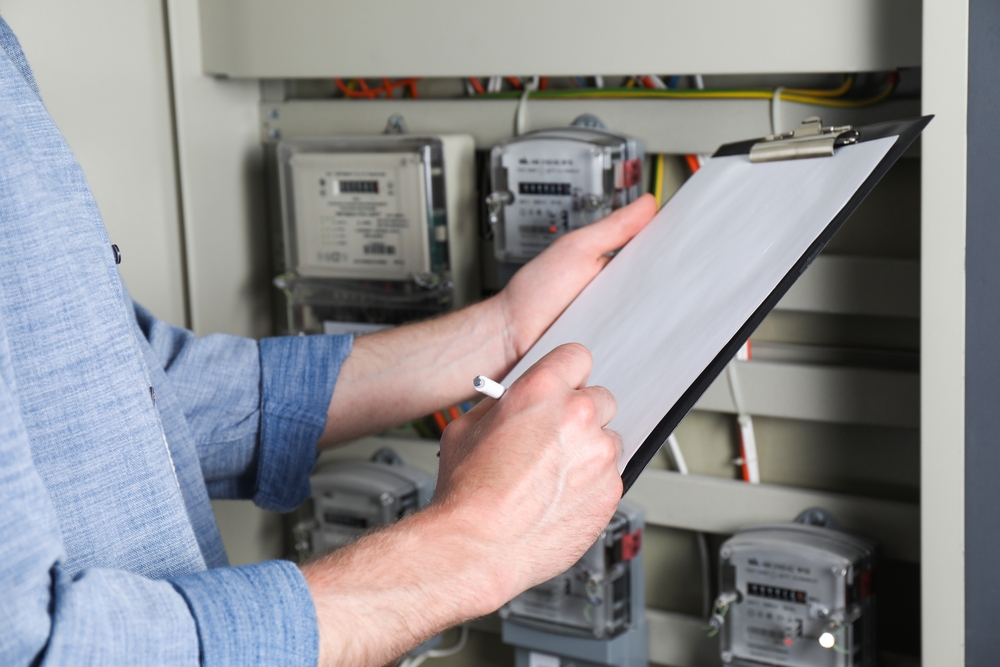
The electrical panel is the starting point for any post-winter inspection. You are not opening it. You are looking at it, around it, and near it.
Look for any rust, moisture staining, or discolouration on the panel door or the wall surrounding it. A musty smell near the panel is a red flag that moisture has made its way inside. Check that all breakers are firmly seated and that none are stuck in the middle tripped position. If a breaker tripped repeatedly over the winter without a clear reason, that is a conversation for a licensed electrician.
Confirm that every circuit is clearly labelled. An unreadable panel is a safety hazard, especially in an emergency.
Inspect Every Outlet and Switch
Walk through each room and give every outlet and switch a visual inspection. Cover plates should sit flush against the wall with no cracks, scorch marks, or discolouration. Any outlet that feels warm to the touch, even with nothing plugged in, needs professional attention right away.
In bathrooms, the kitchen, the laundry room, and the garage, check that ground fault circuit interrupter (GFCI) outlets are working properly. Press the test button to cut power, then press reset to restore it. Any GFCI outlet that fails this test should be replaced before it is used again.
If your home was built or renovated in the last decade, arc fault circuit interrupter (AFCI) breakers should be protecting bedrooms and living areas as required by the Canadian Electrical Code. Test these annually using the test button on the breaker itself.
Examine Light Fixtures Inside and Out
Exterior light fixtures take a beating over winter. When the weather allows, remove the globe or cover from each outdoor fixture and look inside for rust, water pooling, or damaged wiring. Dry everything thoroughly before reassembling. A fixture with significant corrosion on the socket should be replaced entirely.
Indoors, look closely at recessed pot lights. Yellowing or browning around the trim ring is a sign that the wrong bulb wattage was used at some point, which can damage insulation inside the housing above the ceiling. Pot lights in insulated ceilings that are not rated for insulation contact are a particular concern, as heat buildup over a long winter can quietly degrade the surrounding materials.
Look at the Exterior Wiring and Service Entrance
The service entrance is where the utility’s wires connect to your home. Inspect the weatherhead from the ground. Look for any fraying in the service drop wires, damage to the cap, or tree branches that may have been rubbing against the cables all winter. If the service drop appears to sag close to a structure or the ground, contact your utility provider. That section of the wiring is their responsibility.
Check all exterior outlets. Weatherproof covers should latch fully and the gaskets should be intact. A cracked cover or a compressed gasket that no longer seals properly is both a shock hazard and a potential ignition source. Replace any assembly that is no longer doing its job.
If you have a detached garage, workshop, or shed wired from the house, walk the path of any exposed conduit or buried cable. Frost heaving can crack conduit, shift buried lines, or pull connections apart where wiring enters a structure. Look for ground disturbance along the cable route and any visible damage to conduit fittings.
Inspect the Basement and Any Exposed Wiring
Unfinished basements and crawlspaces are where electrical problems most commonly hide. Moisture that accumulated over winter can reach junction boxes and connections in these areas. Inspect all visible wiring runs for damaged or brittle insulation, especially near areas where pipes may have sweated or where water could have entered through a foundation crack.
Every junction box must have a cover plate. Open junction boxes are a code violation and a fire hazard. If you find one without a cover, fit it immediately. If the connections inside look corroded or were made with electrical tape rather than proper wire connectors, have a licensed electrician bring them up to current code.
In older homes, knob and tube wiring deserves a close look each spring. Confirm that insulation has not been packed around it, as knob and tube requires open air circulation to dissipate heat safely.
Test Smoke and Carbon Monoxide Detectors
Spring is the standard time to test every smoke and carbon monoxide detector in the home. Press the test button on each unit and confirm the alarm sounds clearly. Replace any unit that does not respond, sounds weak, or has reached the end of its service life. Most smoke detectors are rated for 10 years. Most combination units are rated for 5 to 7 years.
If your detectors are hardwired, test the interconnect function. When one alarm activates, every alarm in the home should follow. If the interconnect is not working, a licensed electrician will need to trace the low voltage wiring.
For battery-operated units, install fresh batteries now, before you need them.
Check Appliances and Seasonal Equipment
Winter puts sustained demand on high-draw appliances including electric furnaces, baseboard heaters, water heaters, and dryers. Pull major appliances away from the wall where practical and look for cord damage, melting near the plug end, or scorch marks on the outlet behind the unit.
Pay close attention to the cord on your electric range and dryer at the point where it enters the appliance. This is a high-stress area that degrades with heat cycling and vibration over time. A cord with a cracked jacket or exposed conductors should be replaced before the appliance is used again.
As you bring out spring and summer equipment such as lawnmowers, power tools, and outdoor extension cords, inspect each cord before use. Extension cords stored in an unheated garage over winter can become brittle. Flex each cord gently along its full length and look for cracking in the outer jacket. Any cord showing cracks should be discarded. The cost of a replacement cord is nothing compared to the risk of a fault.
When to Call a Licensed Electrician
Some of what this inspection turns up will be straightforward to address. Other findings will require a professional. Signs that warrant a call without delay include repeated tripped breakers, any burning smell near outlets or the panel, visible sparking, discoloured cover plates, and flickering lights that are not explained by a loose bulb.
In most Canadian provinces, certain electrical work must by law be performed by a licensed contractor and may require a permit and inspection. Your provincial electrical safety authority can confirm what falls under that requirement in your area.
If your home is more than 40 years old and has never had a full electrical inspection, this spring is an excellent time to schedule one. Homes built in the late 1960s and 1970s may have aluminum branch circuit wiring, which is common in Canada and requires specific maintenance and inspection procedures that go beyond a visual walkthrough.
Make It a Spring Habit
Post-winter electrical inspection does not take long, but the payoff is significant. A few hours of careful attention each spring can prevent the kind of slow-developing faults that cause fires, failed appliances, and expensive repairs. Work through the checklist, document what you find, and bring in a professional for anything that falls outside your comfort level.
Spring cleaning starts with what you can see. Electrical safety starts with what you cannot.