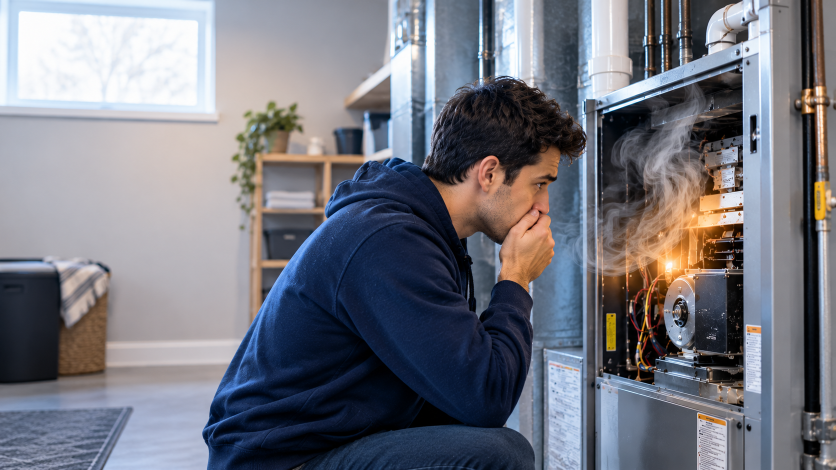

The first cold days of autumn have arrived, and you finally turn on your furnace. Within minutes, a strange burning smell starts drifting through your Canadian home.
Should you be worried?
In many cases, a burning smell when the furnace first kicks on is completely normal. Dust can accumulate inside the heating system during the warmer months and burn off when the furnace starts producing heat again.
However, not every furnace burning smell is harmless. An odour resembling burning plastic, overheated wiring, or smoke can indicate an electrical problem that needs immediate attention.
For homeowners across Canada, understanding the difference can help protect your family, prevent potential electrical fires, and keep your heating system operating safely throughout the winter.
In this guide, we’ll explain what causes furnace burning smells, which warning signs you should never ignore, and what to do if something doesn’t seem right.
Is a Burning Smell From Your Furnace Normal?
Yes, a mild, dusty burning smell during the first heating cycle of the season is often normal. The important factors are what the smell resembles, how long it lasts, and whether other warning signs appear.
After sitting unused throughout a Canadian summer, your furnace may have a thin layer of dust on its internal components. When the system heats up, that dust can produce a temporary burnt or musty odour.
This smell should gradually fade as the furnace continues operating.
However, a strong smell of burning plastic, hot electrical components, or persistent smoke should never be dismissed as ordinary dust.
Here’s a quick comparison:
| What you notice | What it could mean | What you should do |
|---|---|---|
| Mild, dusty smell on the first start of the season | Dust burning off heated surfaces | Monitor it if it quickly fades and there are no other warning signs |
| Burning plastic or hot wiring smell | Possible overheating or electrical fault | Turn the furnace off if safe and arrange urgent professional inspection |
| Smoke, sparks, or visible signs of fire | Potential fire or electrical emergency | Leave the area and call 911 |
| Rotten-egg smell or suspected natural gas leak | Possible gas leak | Leave immediately and call your gas utility or emergency services from outside |
| Burning smell that persists or returns repeatedly | Possible mechanical or electrical problem | Stop using the furnace and arrange professional inspection |
When in doubt, prioritise safety over keeping your home warm.
1. Burning Dust: The Most Common Reason
If your furnace smells slightly burnt the first time you switch it on in autumn, accumulated dust may be the cause.
During spring and summer, dust settles on surfaces inside the furnace and throughout the ductwork. When the heating system starts again, the dust heats up and creates a familiar burnt-dust smell.
You might notice this odour when:
- You turn on your furnace for the first time after summer.
- Your heating system has been unused for several months.
- The temperature drops suddenly and the furnace runs for the first time in weeks.
- Warm air begins circulating through your home’s vents.
How long should the smell last?
A normal dust smell should become weaker over the first few heating cycles and disappear within a relatively short period, often within a few hours.
The exact duration depends on the system and how much dust has accumulated.
If the smell becomes stronger, lasts unusually long, returns every time the furnace starts, or is accompanied by smoke or unusual noises, turn the system off and arrange an inspection.
Important: Do not assume every burning smell is caused by dust simply because it’s the first day of the heating season.
2. Burning Plastic or Electrical Smells: A Serious Warning Sign
A sharp smell resembling melting plastic, overheated rubber, or burning electrical wiring is much more concerning than a mild dusty odour.
Your furnace relies on electrical components to operate safely, including the blower motor, wiring, control board, switches, and other parts. A fault or overheating component can produce an unpleasant burning smell.
Possible causes include:
- Damaged or deteriorating electrical wiring.
- An overheating blower motor.
- Faulty electrical connections.
- A malfunctioning control board.
- Electrical components working under excessive strain.
In some cases, an electrical problem can create a fire hazard.
What should you do?
If you suspect an electrical burning smell:
- Turn the furnace off using the thermostat if you can do so safely.
- Do not restart it to see whether the smell disappears.
- Avoid removing furnace panels or attempting electrical repairs yourself.
- Arrange an inspection by a qualified heating professional or electrician, depending on the suspected fault.
If you see smoke, sparks, flames, or signs of an active electrical fire, leave the building and call 911. Do not approach the equipment or attempt to switch off power if doing so would put you at risk.
For additional guidance, read Health Canada’s electrical product safety recommendations.
3. A Burning Smell That Won’t Go Away
A temporary smell during the first furnace startup is one thing. A smell that continues for hours, returns every day, or becomes stronger is another.
Persistent odours can indicate that the furnace needs maintenance or that a component is not operating correctly.
Potential causes include:
- A clogged or dirty air filter restricting airflow.
- Dust or debris accumulating inside the system.
- An overheating motor or other component.
- A mechanical fault affecting normal operation.
- An electrical issue that needs professional diagnosis.
Can a dirty furnace filter cause a burning smell?
A dirty filter can restrict airflow and contribute to overheating in some heating systems. It may also allow dust to accumulate elsewhere in the system.
Check your filter only when it is safe to do so, following the manufacturer’s instructions. Replace it if necessary and make sure air vents and returns are not blocked.
However, changing the filter is not a solution to a suspected electrical fault. If the smell resembles burning wiring or plastic, stop using the furnace and have it inspected.
Regular maintenance is particularly important in Canada, where heating systems may run frequently during long, cold winters.